Best Car Seats for Airplane Travel in 2026: FAA Picks That Fit
Our first flight with an infant car seat ended at the jet bridge when the gate agent asked to see the FAA label and we could not find it in the dim light, with a line of passengers stacking up behind us and the baby already fussing. We had never bothered to check the sticker because some list online said “most infant seats work on planes,” which is mostly true, but yours still needs the exact words on the exact model you own before you get to the gate.
Flying surfaces problems your driveway never shows you, like economy seats that are only about 17 inches wide, installing with a lap belt instead of LATCH, and deciding whether you're carrying the carrier, the base, or both through security while also holding everything else. That 28 lb convertible that slides into your SUV without drama can feel like a punishment at the gate, so weight and width matter almost as much as the FAA stamp when you're picking a seat for travel.
Below are four FAA-approved infant car seats from the BabyPickr gear finder ranked for flying, plus notes on the Doona, toddler convertibles, and the seats that fail at the cabin door. If you also need a seat for a compact back seat, read that guide after this one.
The FAA strongly recommends a child restraint on board when you buy a ticketed seat. Lap infants under 2 are a separate choice with different safety tradeoffs. This guide assumes you bought a seat for the baby and plan to install a car seat in it.
We added premium brands like Nuna through ANB Baby, an authorized retailer. Those picks aren't always on Amazon, so we link to ANB Baby where needed.
What to Check Before You Fly
Find the red FAA label on your seat. Look for language that says the restraint is certified for use in motor vehicles and aircraft. It is usually a red sticker on the shell or in the manual pocket. Photograph it before you leave home. Gate agents sometimes ask.
Harness only on board. Belt-positioning boosters are not FAA approved because airplanes provide only a lap belt, not the lap-and-shoulder belt combo boosters need to restrain the upper body. Highback boosters also rely on a vehicle-style seat back that does not match an airplane cushion. Combination seats are fine on the plane only when used with the built-in 5-point harness, not in booster mode. Check the manual for your model.
Measure the airline seat. Most economy seats are 16 to 17 inches wide. A wide convertible shell can overhang the cushion. Infant carriers usually fit. When in doubt, call the airline and ask for the narrowest seat width on your aircraft type.
Base vs carrier only.Most parents check the base and install the infant carrier with the plane's lap belt. Some families check the whole seat at the gate in a bag. If you install in the cabin, practice the belt path at home on a kitchen chair so you're not learning it at 35,000 feet. At your destination, baseless belt installs need a locking vehicle seat belt or a locking clip. Rental cars and older taxis sometimes lack a locking latch, so confirm before you land or pack the base in a checked bag.
Watch the lap belt buckle.Airplane seat belts use a thick metal flip-latch buckle that sits in the center of the cushion. On rear-facing infant seats like the Chicco KeyFit Max or Graco SnugRide, that buckle often rests against the child's back or keeps you from getting a tight install. Ask the flight attendant for a belt extender if the buckle fights the belt path, and try the window seat so you have room to kneel and pull slack.
Plan for tight legroom and tray tables. A rear-facing car seat pushes your child several inches forward compared with sitting on the cushion alone. In economy rows with about 30 inches of pitch, a toddler in a forward-facing harness seat often has their knees pressed into the seatback ahead. That blocks the tray table in their own row from folding down, so coloring books and snacks on the tray may not work. It also means accidental kicks on the passenger in front for the whole flight. Infant carriers are less of an issue because the shell is shorter. Bulkier toddler convertibles make this worse. A bulkhead row or extra legroom seat helps if you can choose seats at booking.
Window seat helps. A car seat blocks the middle seat passenger from exiting quickly. Many flight attendants prefer the car seat in the window, with an adult in the adjacent seat. You cannot install a car seat in an exit row, or in the rows immediately in front of or behind an exit row on most major US airlines. Those rows need clear space for emergency hatch removal.
The Best FAA Car Seats for Flying in 2026
Ranked by infant carrier weight. All four are FAA approved in our catalog.

Graco SnugRide Lite LX Infant Car Seat
At 7.2 lbs the SnugRide Lite LX is the lightest FAA-approved infant carrier we sell on Amazon. That matters when you're juggling a diaper bag, a boarding pass, and a baby who woke up at security. The base stays home or goes in a checked bag. On the plane you install with the lap belt through the carrier path, same as any infant seat. At $140 it's the easiest yes if you fly once or twice a year and don't want travel gear eating your budget.

Clek Liing Infant Car Seat
Clek built the Liing at 9 lbs with a slim shell that fits most economy seat cushions without hanging over the edge. Rigid LATCH and the load leg make home installs foolproof. On the plane you still use the belt path through the carrier. CPSTs recommend it for parents who fly and drive in tight cars. At $499 the price stings if the seat is only for vacation.

UPPAbaby MESA V3 Infant Car Seat
The MESA V3 weighs 9.9 lbs and installs on the plane the same way as the other infant seats here: belt through the carrier, red FAA label visible for the flight attendant if they ask. Where it wins is the airport floor. Click it into your Vista or Cruz, wheel to the gate, pop it off for the plane. If you already bought the stroller, this is the seat to match. If you didn't, the KeyFit Max does the same job for less.

Chicco KeyFit Max ClearTex Infant Car Seat
The KeyFit Max ClearTex hits the middle on weight (10.5 lbs), price ($250), and install confidence. Chicco lists it FAA approved, and the bubble level on the base makes home installs obvious when you land. It pairs with Chicco strollers without adapter drama. If you want one infant seat for the hospital, the compact car, and the annual flight to see family, this is the default pick we recommend first.
The Doona Question: One Piece Through the Airport
The Doona is an infant car seat with wheels that fold out into a stroller. It lives in our stroller catalog, not the car seat list, because you buy it as a travel system alternative. We covered it in our travel systems guide. For flying, it's FAA approved as an infant seat and you wheel it to the gate instead of carrying a separate carrier.

Doona Car Seat & Stroller
At 17.2 lbs it's heavier than a bare infant carrier, but you're not also dragging a stroller frame. The US Doona tops out at 32 inches tall or 35 lbs, whichever comes first. Most babies hit the height limit around 12 to 14 months, well before the weight cap, so treat it as a newborn travel tool, not a long-term seat. Worth it if your trip starts at curbside and ends at a rental counter. Skip it if you already own a KeyFit Max and a travel stroller you love.
Premium Picks: Also Worth Considering
A step up for frequent flyers. Nuna isn't always on Amazon, so we link to ANB Baby.
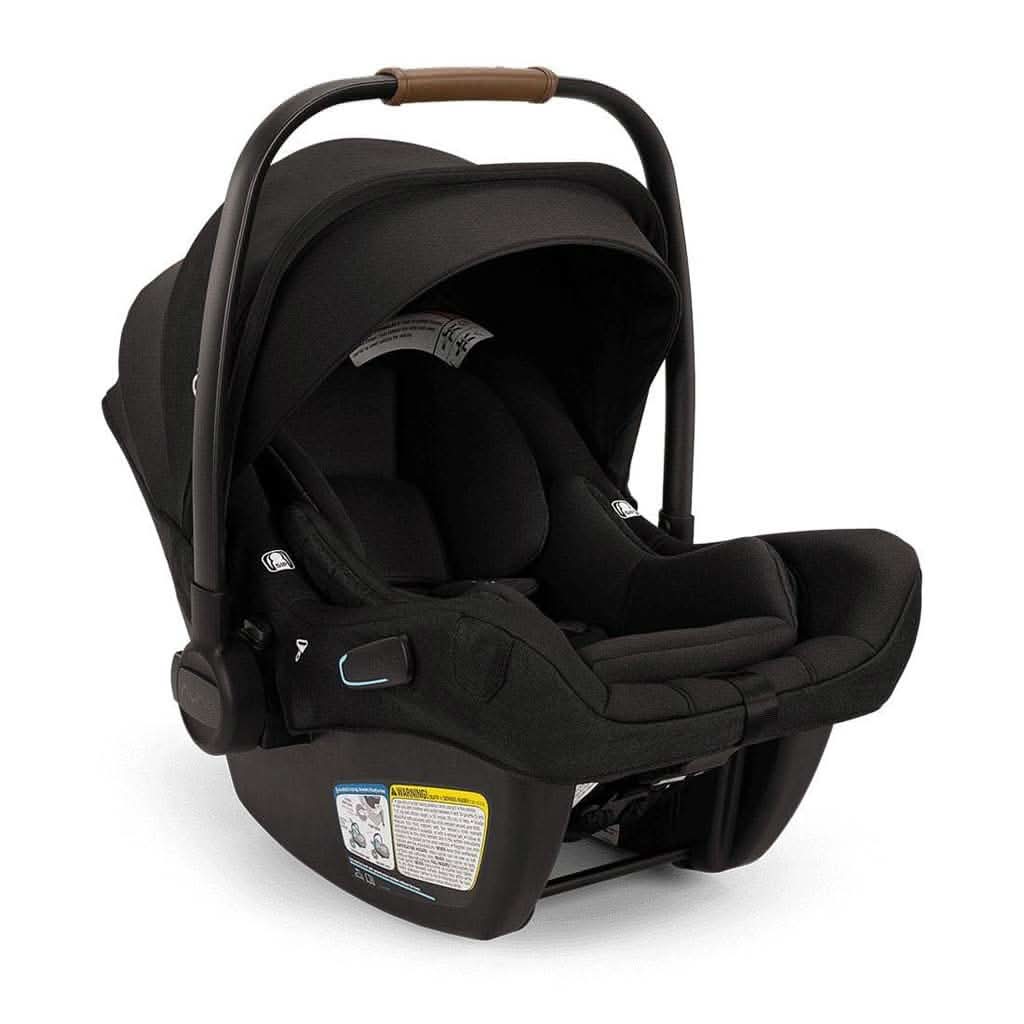
Nuna PIPA Aire RX Infant Car Seat with RELX Base
The carrier shell weighs 6.2 lbs without the canopy and inserts (about 8.4 lbs ready to carry). It's lighter than the Clek Liing with a RELX base that installs level in tight cars when you land. FAA approved for the flight itself.
Available at ANB Baby, an authorized retailer. Prices may vary.
Toddlers Still in a Harness on Planes
Once your child outgrows an infant carrier, you can still use many convertibles and all-in-one seats on the plane in harness mode if they carry the FAA label. The problem is weight and bulk. Lugging a 16.5 lb Maxi-Cosi Pria All-in-One Convertible Car Seat, SeaDrift through ORD is a workout. Forward-facing in a tight economy row also pushes their legs into the seat ahead and blocks the tray table in their row. It works if you check the seat at the gate in a travel bag and only install at your destination rental, or if you booked extra legroom.
The Nuna RAVA Convertible Car Seat is FAA approved and rear-faces to 50 lbs, but at 27.9 lbs we would not carry it down the jet bridge unless we had no other option. Dedicated travel seats like the WAYB Pico or Cosco Scenera are what frequent flyers buy for this stage. We do not stock them yet, so we will not rank them here.
If your toddler still fits an infant seat by height and weight, keep using the lighter carrier for one more trip. The SnugRide Lite LX goes to 30 lbs. The KeyFit Max goes to 30 lbs with more headroom. Switch to a harness convertible when their shoulders clear the infant shell.
Seats to Skip on Planes
Belt-positioning boosters. The Chicco KidFit and any highback or backless booster are not FAA approved. Boosters need a lap-and-shoulder belt, and airplane seats provide only a lap belt. The flight attendant will make you gate-check it.
Heavy rotating convertibles. Evenflo Revolve360 and Baby Jogger city turn are excellent in a minivan. On a plane they are awkward to lift and wide on the cushion.
Bulky toddler seats in standard economy. Even FAA-approved convertibles like the Britax Poplar S or Graco SlimFit 3-in-1 work on board in harness mode, but their depth makes legroom miserable in 30-inch pitch rows. See the tray-table note above before you carry a full-size convertible down the jet bridge.
Buying a second seat just for travel. If you fly once every two years, your everyday FAA infant seat is probably enough. A dedicated travel seat pays off at three or more flights before age 2.
Which One Is Right for You?
Answer in order. First match wins.
Do you want one piece from curb to gate?
The Doona if the budget allows and baby is still infant-sized. Otherwise a light infant carrier plus a gate-checked stroller from our Disney travel stroller guide.
Is your budget under $200?
The Graco SnugRide Lite LX at about $140. Lightest Amazon carrier here and FAA approved.
Do you already own a UPPAbaby Vista or Cruz?
The UPPAbaby MESA V3 for no-adapter click-in at the airport.
Do you fly three or more times before baby turns one?
The Clek Liing or Nuna PIPA Aire RX in our premium section if you want the lightest premium options. The KeyFit Max if you want one seat for car, plane, and stroller without premium pricing.
Not sure and want the safe default?
The Chicco KeyFit Max ClearTex. It is the pick we recommend when someone says they are flying once this year and driving a compact car the rest of the time.
Don't want to read the whole guide?
Try the Gear Finder
Filter by lightweight priority, vehicle fit, and budget. Pick Travel often in the journey to boost FAA-approved seats.
Find your travel car seat →Quick Answers
Does my car seat need to be FAA approved to fly?
Yes, if you plan to install it in a ticketed seat on the plane. Look for the red label that says certified for use in motor vehicles and aircraft. Belt-positioning boosters never qualify because they need a shoulder belt. Most harnessed seats sold in the US do qualify, but verify on your exact model.
What is the lightest FAA-approved infant car seat?
In our data, the Graco SnugRide Lite LX at 7.2 lbs is the lightest Amazon pick. The Nuna PIPA Aire RX carrier shell is 6.2 lbs without the canopy and inserts (about 8.4 lbs ready to carry), the lightest premium option through ANB Baby. Dedicated travel-only seats like the WAYB Pico are lighter but not on BabyPickr yet.
Can I gate-check a car seat?
Yes. Most airlines gate-check car seats and strollers for free. If you gate-check, you cannot use the seat during the flight. Many parents gate-check the base and carry the infant carrier on board for the install.
Is the Doona worth it for flying?
If you travel with a newborn more than twice a year and hate carrying a separate carrier and stroller frame, yes. It is FAA approved and rolls through the terminal. The US model tops out at 32 inches tall or 35 lbs, whichever comes first, and most babies hit the height limit first. See our travel systems guide for how it compares to traditional bundles.
From our catalog
Compare lightweight car seats on BabyPickr
Filter by vehicle fit, seat type, and budget. Pick Travel often in the gear finder to surface FAA-approved picks.
Browse car seats →More from BabyPickr
Best Travel Systems for Your Situation in 2026
Five travel systems for city apartments, compact cars, tall parents, and rideshare life. Bundle prices, infant seat specs, and honest watch-outs from our catalog.
Best Convertible Car Seats for Your Situation in 2026
Six convertible and rotating car seats ranked for rear-facing years, back-seat fit, and one-and-done value in 2026. Catalog prices, weights, and the install details we'd warn a friend about.
Best Car Seats for Compact Cars in 2026
Six car seats that actually fit a compact back seat. Real specs on base depth, install angle, and FAA approval.
Get your personalized gear checklist
A short email based on your situation. No spam, ever.
Safety note: Always verify safety information directly with the FAA, your airline, and your car seat manufacturer before flying. Regulations and product specs may change. BabyPickr is not a substitute for professional child passenger safety advice.
* Prices shown are approximate and may vary on Amazon.
This article contains Amazon and ANB Baby affiliate links. We earn a small commission at no extra cost to you. ANB Baby is an authorized retailer of premium baby gear brands.